
21 Nov 2023
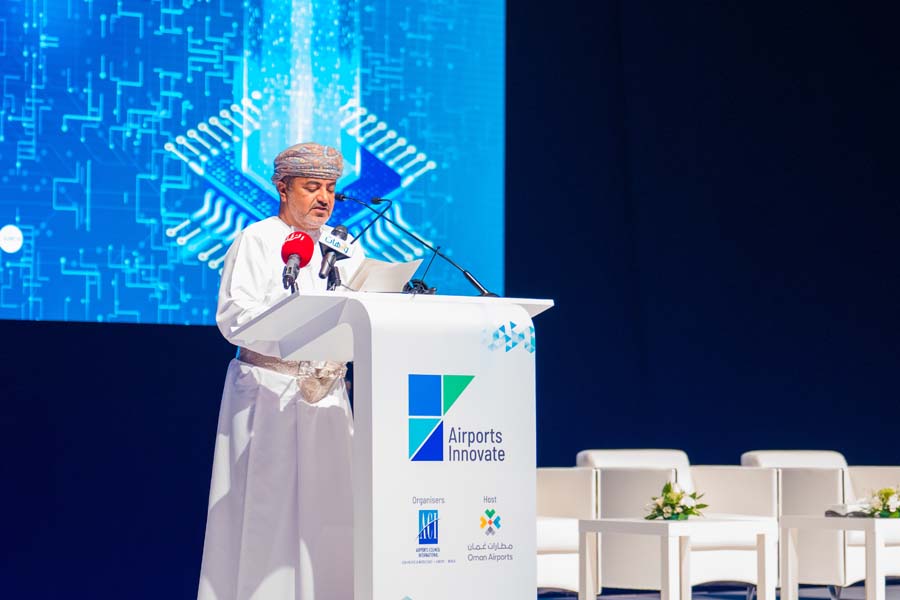

The Minister of Transport, Communications, and Information Technology and the Chairman of Oman Airports, His Excellency Engineer Hamood bin Said Al Maawali, inaugurated today, Tuesday, November 21, 2023, the Airports Innovate Conference and Exhibition, which is hosted by the Sultanate of Oman, represented by "Oman Airports," at the Oman Convention and Exhibition Center in Al Irfan City.
The conference is attended by more than 400 local and international figures, over 30 sponsors and exhibitors, and 60 speakers from global airport leaders, aviation technology developers, airlines, civil aviation authorities, industry suppliers, and air transport experts.
Achievements of the Renaissance
The airport sector represents one of the achievements of the blessed Renaissance. The government, under the wise leadership of His Majesty Sultan Haitham bin Tarik, may God protect him, places utmost attention to this vital sector due to the Sultanate of Oman’s geographical and strategic location between the East and the West, in addition to the deeply-rooted history of our ancient civilization and the generous hospitality that the people of Oman have been known for since ancient times.
The Minister of Transport, Communications, and Information Technology added that The Sultanate of Oman has built several modern airports, such as Muscat International Airport, Salalah Airport, and Duqm Airport, equipped with the latest technologies and highest specifications. We look forward to further developing Sohar Airport and establishing a new airport in the Musandam Governorate soon.
He added, Today, we are witnessing a substantial increase in travel movements to, from, and through the Sultanate of Oman. The figures indicate a steady growth in travel following the challenges posed by the COVID-19 pandemic, with the expectation to soon surpass pre-pandemic levels, God willing.
Search for solutions
Your gathering today in the Sultanate of Oman is part of the continuous search for and development of innovative solutions to meet the challenges of this rapidly evolving sector, amidst swift advancements in technology and artificial intelligence.
The Sultanate has recently launched the Oman Airports Innovation Lab and the AeroHack, furthering innovation and supporting startups that contribute to the aviation and travel industry. All these initiatives align with Oman Airports' international commitments to enhance travel and connections between people, inspired by the divine saying, "And We made you peoples and tribes that you may know one another."
In concluding his speech, Engineer Hamood bin Said Al Maawali said, I extend my warmest greetings once again to you in the Sultanate of Oman. I hope you have a delightful stay, discovering the history, civilization, and cultural richness of our land. May this conference yield fruitful recommendations for a bright future for the airport sector.
Promising future
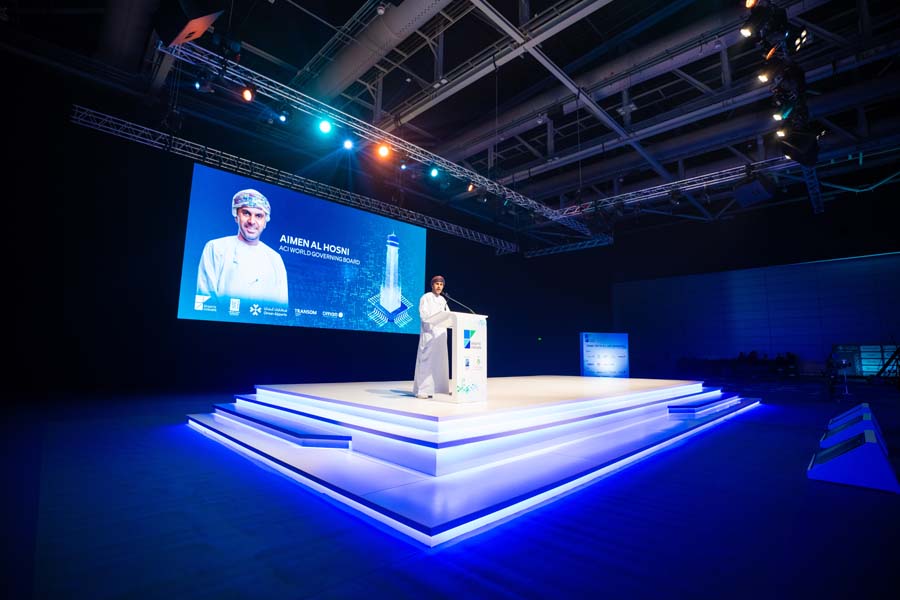
For his part, Sheikh Aimen bin Ahmed Al-Hosni, the CEO of Oman Airports and Board Chairman of Airports Council International said, “We, at Oman Airports are proud to host the first Airport Innovate Conference jointly organized by ACI Asia-Pacific, ACI EUROPE, and ACI World. It coincides with the joyous occasion of Oman’s 53rd National Day and I hope you will enjoy this amazing event and the beauty of my beloved homeland, Oman. I am graced by the wisdom and guidance of HM Sultan Haitham bin Tarik, whose leadership has been crucial in steering our nation towards greater heights.
He added, “I express heartfelt appreciation for the support and vision that continues to shape Oman's progress and innovation. Under His Majesty’s esteemed leadership, we have witnessed a renewed commitment to excellence and a dedication to fostering a future full of opportunities.”
Future of Travel:
Today, as we come together among this distinguished gathering of visionaries, leaders, and esteemed guests of the aviation industry at Oman Airports, we gather here to celebrate the innovative minds, reflecting the strong dedication of the airport industry to shaping the future of air travel and airport excellence, Sheikh Aimen said.
The history of Oman's legacy in sailing the world through ancient maritime routes serves as an inspiring narrative resonating in the evolution of today's aviation sector. Centuries ago, Omani sailors fearlessly navigated the seas, charting paths that bridged diverse cultures and facilitated global trade. Their courageous exploration and resilience paved the way for Oman's establishment as an international hub. Today, the aviation industry in Oman stands as a testament to our forefathers' adventurous spirit. Just as they expanded Oman's reach across the seas, the aviation sector in Oman now serves as a modern macro-economic contributor, connecting Oman to the world, fueled by the same determination, resilience, and unyielding spirit of adventure, he added.
Global recovery
The CEO of Oman Airports and ACI Board Chairman said: Despite recent challenges in the aviation industry, the global recovery of passenger traffic across various regions signifies hope and resurgence. We have taken considerable strides from the trying times of Covid regarding our industry’s passenger recovery. As of August 2023, we’ve reached a global recovery of 92%, or a yearly total of 4.7 billion passengers to date, with optimistic projections estimating a full recovery as early as sometime mid-2024. Concerning regional recovery, Latin America/Caribbean and the Middle East have already surpassed 2019 figures, with Africa and North America not far behind in reaching full recoveries.
Europe and Asia/Pacific, although behind other regions in recovery, are also witnessing continued improvement and a surge in recovery as well. Across our regions, steady progress manifests the industry's resilience and adaptability. Embracing this important moment as an opportunity for innovation and growth, Oman Airports stands strong to pave the way for a new era in aviation, he noted.
Innovation and transformation in the aviation industry
The CEO of Oman Airports said that the future of the global aviation industry presents a landscape characterized by innovation, resilience, and transformative changes. Technological advancements, including electric and hybrid aircraft, artificial intelligence, and sustainable fuel solutions, are being developed to revolutionize air travel. As the world and aviation industry still navigates post-pandemic recovery, a renewed focus on health and safety measures and the radical introduction of artificial intelligence, coupled with an increased emphasis on sustainability and ESG practices, will shape the industry's direction.
The integration of digitalization, such as enhanced passenger experiences and operational efficiencies, promises to redefine the way we interact within our airports. Collaboration among industry stakeholders, governments, and innovators will be critical in fostering a future where the aviation ecosystem not only thrives but also contributes to a more connected, efficient, and environmentally conscious global community, he added.
Oman Airports Innovation Hub
The CEO of Oman Airports said, “At the heart of our commitment to innovation lies the 'Oman Airports Innovation Hub,' a collaborative centre nurturing groundbreaking ideas for the future of air travel. The Hub serves to capture airport talent, encourage collaboration from stakeholders, facilitate knowledge sharing with digital partners, involve academic experts, and fund technological startup projects. This platform aims for Oman Airports to promote and incubate innovative ideas through the utilization of venture capital. Another initiative we recently introduced includes the Aero Hackathon, aimed at capitalizing on external talents by providing a platform for fostering innovative airport-specific solutions
Sheikh Aimen Al-Hosni stressed that this event, which Oman Airports hosted, attracted over 700 of the finest aviation minds pioneered more than 300 potential solutions, in fields varying from Customer Experience, airport operations, automation and efficiency, safety and security, and sustainability.
The winners in this event included three projects, with the first place being an innovative drone technological solution aimed at measuring and cleaning excess rubber from runways after braking system buildup. Other innovative ideas also included capturing passenger footfall energy in the terminal to generate electricity, as well as another idea which comprehensive airport experience travel application to capture and share a wide array of data between the user and our airports.
Improving Customer Experience
We are proud to have recently hosted such an innovative event which generated a wide array of creative ideas aimed at optimization and enhancement of the customer experience. Furthermore, our continuous investment in digitalization seeks to redefine the airport experience at airports managed by Oman Airports, Sheikh Aimen Al-Hosni said.
He added, “Our vision is not just a technological upgrade but also a fundamental shift in how passengers navigate our airports. From smart check-ins to cutting-edge security measures, we aim to revolutionize the passenger journey, prioritizing both convenience and safety.”
In today's dynamic landscape, where technological advancements and Artificial Intelligence are transforming all industries, the significance of nurturing the well-being of our people cannot be overstated. As AI continues to shape various job markets including aviation, it is essential to recognize that the most vital and irreplaceable asset within our organizations is our workforce, he added.
While technical skills are undeniably important, the cultivation of empathy and emotional intelligence is becoming increasingly mission-critical. Empathy stands as the cornerstone of our staff's abilities, fostering connections, understanding diverse perspectives, and strengthening the human touch in an era where human empathy sets us apart from technological advancements.
We at Oman Airports believe that investing in the well-being and emotional intelligence of our people will not only strengthen Oman Airports' global completeness but also solidify the human connection that remains essential to our success.
I am immensely proud of my team for the steps we have taken and the path we are shaping for the future of the aviation sector in Oman. Oman Airports stands at the frontline of innovation and transformation, leading the charge in this new era of aviation.
Let us recognize the strength of unity as we collectively boost the aviation industry into a future that surpasses all boundaries, uniting in our pursuit of innovation and excellence, he concluded.
Rising passenger traffic
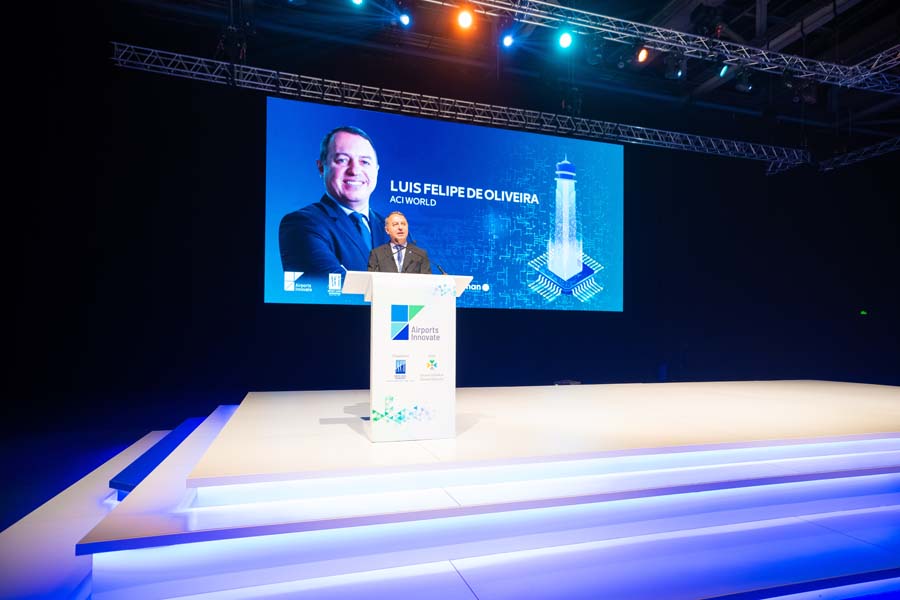
In turn, Louis Philippe, the Chief Executive Officer of the Airports Council International, expressed his delight at the opening of the first Airports Innovate Conference in the Sultanate of Oman. The event was jointly organized by the A CI Asia-Pacific, ACI the Middle East, and ACI Europe, as well as the Airports Council International. This marks a celebration of innovation in the aviation sector and reaffirms our collective commitment to shaping the future of airports and air travel.
Philippe revealed in his speech to the conference that global passenger numbers are climbing, and by the end of 2023, it is expected to reach 8.6 billion travellers, which is about 94.2% of the levels we saw before the pandemic.
He added that the Asia-Pacific region is expected to recover by the end of 2023, reaching 87.3% of its 2019 passenger levels, thanks to the ongoing opening of the Chinese market. Recovery was not that robust because of economic factors and overseas tourism restrictions. In 2024, the region is projected to reach about 3.4 billion passengers, which is 99.5% of the pre-pandemic levels.
Despite the geopolitical situation, the Middle East region is predicted to continue its recovery and reach 96.8% of the pre-COVID level, he said, adding that in 2022, Europe saw a boost in passengers due to summer travel. By the end of this year, Europe is expected to reach 2.3 billion passengers (that is 95.5% of the pre-COVID level), he added.
2.5 billion passengers
Philippe expected the number of passengers would rise in Europe to 2.5 billion in 2024, exceeding pre-pandemic levels by 1.4%. He noted that the Latin America-Caribbean region had the quickest recovery. In 2023 the region is expected to reach 102.9% of the pre-pandemic count (estimated 707 million passengers). The region is forecasted to be the first region to surpass its 2019 levels in 2023.
In his presentation in the inaugural session, Phillipe said, North America enjoys a very early recovery driven by its robust domestic market. It is expected to reach 99.8% of pre-pandemic levels in 2023 and 103.7% of pre-COVID levels, in 2024. He noted that Africa is estimated to reach 93% of pre-pandemic levels by the end of this year and reach 110.6% of 2019 levels with 253 million passengers by the end of 2024.
Outlook for passenger recovery
He pointed out that 2024 is expected to be a milestone for global passenger traffic recovery as it reaches 9.4 billion passengers, surpassing the year 2019, which welcomed 9.2 billion passengers.
Regarding the upside risks, Philippe said that they are represented Reopening of the Chinese market, easing supply chain disruptions and slowing inflation. He stressed that we need to remain vigilant regarding the downside risks, which include geopolitical conflicts, jet fuel prices, tight labour markets in advanced economies and Wage-price spirals that impact inflationary pressures. He added that despite the headwinds, the main positive developments are improved business and consumer sentiment.
Long-term passenger traffic growth
He said global passenger traffic is expected to double in the next two decades, adding that the aviation sector, including airports, is very aware of the challenge of handling this growth while still focusing on innovation and sustainability.
He stressed the importance of achieving net-zero carbon emissions by 2050, aligning with the Paris Agreement. He noted that over 550 airports worldwide are actively reducing their CO2 emissions within the ACI Airports Carbon Accreditation program, managed by ACI Europe. He noted that decarbonization is a global imperative, demanding a united response. He said, “We must foster stronger collaboration among aviation stakeholders, involving States, regulators, fuel producers, and the financial sector.”
Airports of tomorrow
He added that ACI World and the World Economic Forum launched this year "Airports of Tomorrow", a new programme to empower airports for a sustainable future. The initiative is built on four pillars – Infrastructure, Sustainable Aviation Fuel (SAF), Finance, and Innovation. Each will foster the exchange of expertise, development of tools and advancement of advocacy.
ESG and financing
He revealed that ACI World is creating a world-first global framework for ESG reporting. This project is necessary to create much-needed consistency in the industry’s global ESG reporting and in unlocking funding for the sustainable future of airports.
Digital transformations of journeys
He noted that airports are going digital to make journeys smoother, safer, and more secure, pointing out that investment in technology has been steadily growing since 2020, with 93% of airports expecting their IT spending to stay the same or increase in 2023 as compared to 2022. Last year’s airport IT spending rose to an estimated $6.8 billion.
Technology innovation awards 2024
He said that Just last week, the opening of submissions for the ACI World-Amadeus Technology Innovation Awards was announced for three categories: Best innovation in airport passenger-related processes, best innovation in airport operations and best airport innovation leader. We are introducing a new award category to recognize the culture of innovation by small, emerging, and regional airports (with 5 million or fewer passengers in 2022). Winners will be announced at the ACI Asia-Pacific and the Middle East / ACI World Annual General Assembly, Conference, and Exhibition in Riyadh, Kingdom of Saudi Arabia from 21–23 May 2024.
Aviation industry
For his part, Stefano Baronci, the Director General of ACI Asia-Pacific and the Middle East said that the aviation industry has been a pioneer in the field of innovation. It works constantly to enhance efficiency and elevate the airport experience.
He added: Some of our airports have already employed advanced technologies to handle millions of passengers in a safe and seamless manner. He pointed out that it is time for the airport community in Asia and the Middle East to reinvent and rethink how we operate, continue to excel in enhancing the passenger experience, and remain at the forefront of competition.
He noted that there is significant room for improvements to better serve our airport guests in the future if some challenges are addressed in a coordinated manner by all stakeholders in the aviation ecosystem.
He added that this event will help us confront these challenges and seize opportunities by bringing together aviation leaders and experts from various fields to discuss the latest trends, technologies, and strategies that can help airports become more efficient, sustainable, and customer-focused.
Sessions
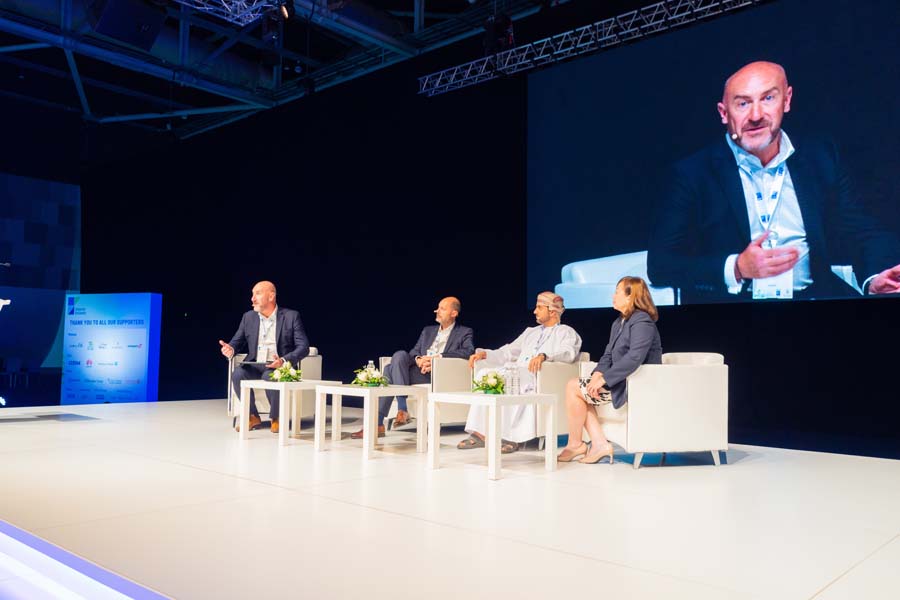
The opening ceremony of the Airports Innovate Conference was followed by working sessions. The first session focused on F5G visual solutions in enabling smart airports. The second session, titled "Meet the Giants: A New Journey towards the Future." The participants discussed the importance of the aviation sector's ecosystem in charting new horizons of unprecedented transformation through technology innovation. They highlighted the significance of exploring the dynamic intersection of airport operations and technology, bringing together giants in the technology industry. It is noted that airports are not only hubs for travellers but also cutting-edge technological advancements. They emphasized the profound impact of technology giants on the aviation ecosystem and stressed the importance of sustainability efforts.
The third session focused on the importance of Electric Vertical Takeoff and Landing (eVTOL) aircraft and the impact of their operations on urban, suburban, and rural areas.

Copyright © 2026 All Rights Reserved.